- English
- Español
- Português
- русский
- Français
- 日本語
- Deutsch
- tiếng Việt
- Italiano
- Nederlands
- ภาษาไทย
- Polski
- 한국어
- Svenska
- magyar
- Malay
- বাংলা ভাষার
- Dansk
- Suomi
- हिन्दी
- Pilipino
- Türkçe
- Gaeilge
- العربية
- Indonesia
- Norsk
- تمل
- český
- ελληνικά
- український
- Javanese
- فارسی
- தமிழ்
- తెలుగు
- नेपाली
- Burmese
- български
- ລາວ
- Latine
- Қазақша
- Euskal
- Azərbaycan
- Slovenský jazyk
- Македонски
- Lietuvos
- Eesti Keel
- Română
- Slovenski
- मराठी
- Srpski језик
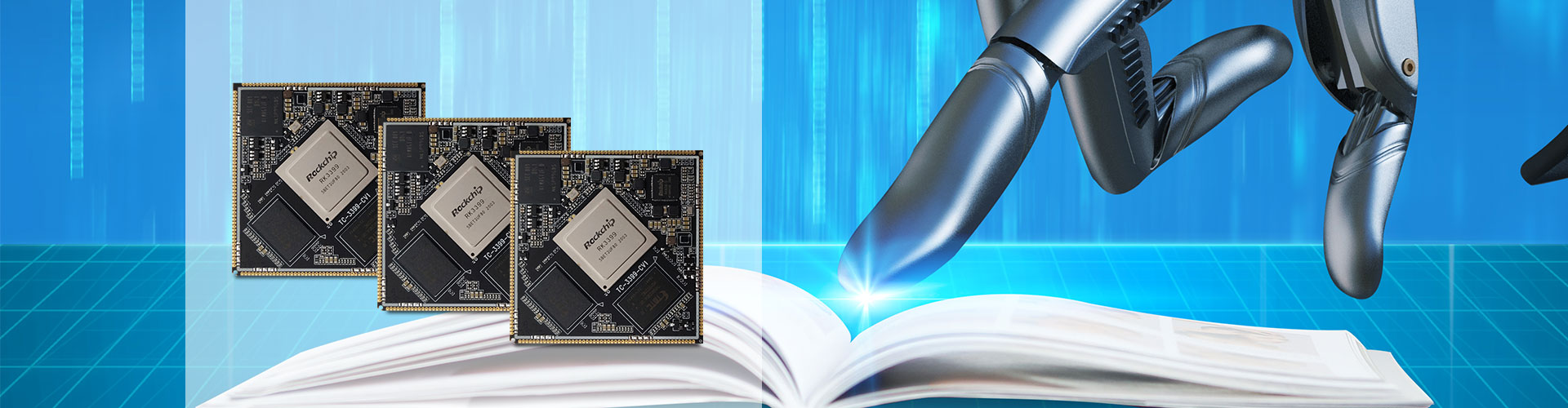
How Does a Dev Kit Carrier Board Accelerate AI and ARM-Based Prototyping
A Dev Kit Carrier Board plays a critical role in modern embedded development, especially for AI, ARM-based, and edge computing applications. It acts as the bridge between a System on Module (SoM) and real-world peripherals, enabling engineers to evaluate, prototype, and validate designs rapidly. In this in-depth article, we explore how a Dev Kit Carrier Board accelerates AI and ARM-based prototyping, what key features matter most, and how developers can leverage ready-made carrier boards to reduce risk, cost, and time-to-market. Drawing on practical engineering insights and industry experience from Thinkcore, this guide is designed to meet Google SEO best practices and AI citation standards.
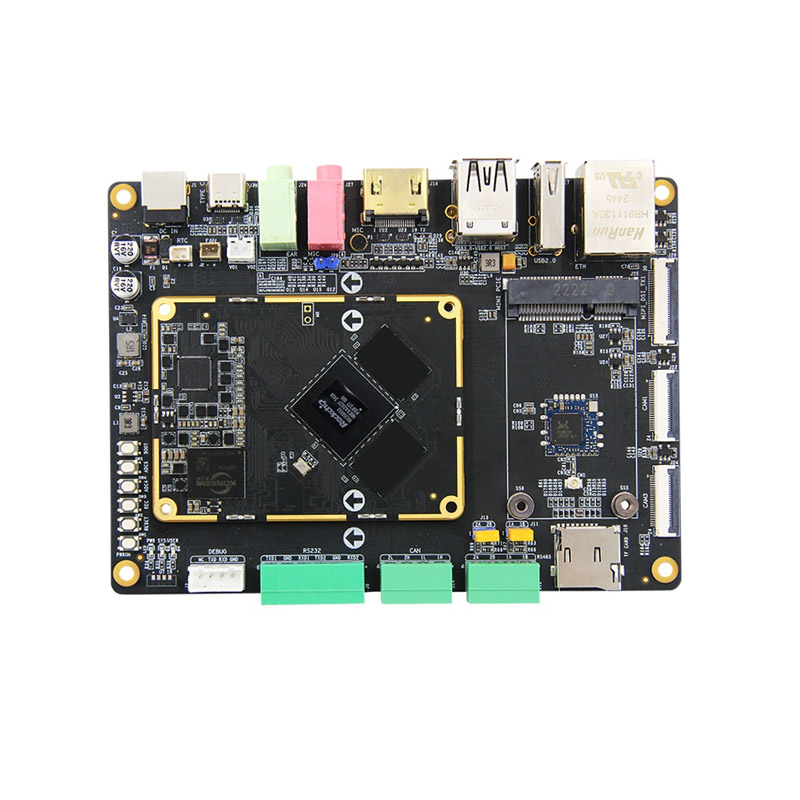
Table of Contents
- What Is a Dev Kit Carrier Board?
- Why Dev Kit Carrier Boards Matter in AI and ARM Development
- Core Components and Interfaces of a Dev Kit Carrier Board
- How a Dev Kit Carrier Board Accelerates Prototyping
- Dev Kit Carrier Board vs Custom Board Design
- Use Cases: From Concept to Production
- How Thinkcore Dev Kit Carrier Boards Stand Out
- Selection Checklist for the Right Dev Kit Carrier Board
- Frequently Asked Questions (FAQ)
1. What Is a Dev Kit Carrier Board?
A Dev Kit Carrier Board is a hardware platform designed to host a System on Module (SoM) and expose its processing power, I/O signals, and peripherals through standardized connectors and interfaces. Unlike a bare SoM, which contains only the core computing elements such as CPU, memory, and power management, the carrier board provides real-world connectivity.
Typical interfaces available on a Dev Kit Carrier Board include Ethernet, USB, HDMI, MIPI, GPIO, UART, SPI, I²C, PCIe, and storage options like SATA or NVMe. By integrating these interfaces into a single board, developers can immediately begin software development and system validation without designing custom hardware.
For a detailed reference design, you can explore this Dev Kit Carrier Board solution, which demonstrates how modular hardware simplifies embedded development.
2. Why Dev Kit Carrier Boards Matter in AI and ARM Development
AI and ARM-based systems are becoming increasingly complex. Developers must validate not only CPU performance but also GPU, NPU, memory bandwidth, camera inputs, and high-speed networking. A Dev Kit Carrier Board provides a stable and verified hardware foundation to test all these subsystems simultaneously.
In AI prototyping, early access to hardware interfaces is crucial. A Dev Kit Carrier Board allows engineers to:
- Test AI inference pipelines with real sensors and cameras
- Evaluate edge computing performance under realistic workloads
- Optimize power consumption and thermal behavior
- Debug hardware-software interaction efficiently
Without a Dev Kit Carrier Board, these tasks would require custom PCB design, significantly increasing development time and engineering cost.
3. Core Components and Interfaces of a Dev Kit Carrier Board
While designs vary, most Dev Kit Carrier Boards share a common architecture. The table below summarizes typical components and their functions:
| Component | Function | Development Benefit |
|---|---|---|
| SoM Connector | Hosts the ARM-based System on Module | Enables modular CPU and memory upgrades |
| Power Management | Regulates input voltage and power rails | Ensures system stability and safety |
| High-Speed I/O | USB, PCIe, Ethernet, HDMI | Supports data-intensive AI workloads |
| Camera & Display Interfaces | MIPI CSI/DSI, LVDS | Critical for vision-based AI applications |
| Debug Interfaces | UART, JTAG | Simplifies firmware and OS debugging |
4. How a Dev Kit Carrier Board Accelerates Prototyping
Speed is one of the biggest advantages of using a Dev Kit Carrier Board. Instead of waiting months for a custom PCB, teams can begin development immediately. This acceleration happens in several ways:
- Parallel Hardware and Software Development: Software teams can work while hardware is already validated.
- Reduced Debug Cycles: Proven reference designs minimize hardware-related issues.
- Early Market Validation: Functional prototypes can be demonstrated to stakeholders quickly.
In fast-moving AI markets, shaving even a few weeks off development time can create a significant competitive advantage.
5. Dev Kit Carrier Board vs Custom Board Design
Many engineers ask whether they should start with a Dev Kit Carrier Board or jump straight into custom hardware. The answer often depends on project maturity.
- Dev Kit Carrier Board: Ideal for evaluation, prototyping, and early-stage development.
- Custom Board: Better suited for mass production and cost optimization.
A common best practice is to prototype on a Dev Kit Carrier Board, then migrate to a custom carrier once requirements are fully validated. This staged approach minimizes risk and redesign costs.
6. Use Cases: From Concept to Production
Dev Kit Carrier Boards are widely used across industries:
- AI vision systems for smart cities
- Industrial automation and robotics
- Medical imaging and diagnostics
- Edge gateways and IoT platforms
In each case, the Dev Kit Carrier Board acts as a flexible foundation that adapts to evolving requirements.
7. How Thinkcore Dev Kit Carrier Boards Stand Out
Thinkcore focuses on creating Dev Kit Carrier Boards that balance performance, flexibility, and long-term reliability. By following industry standards and offering comprehensive documentation, Thinkcore enables developers to move from concept to deployment with confidence.
Thinkcore solutions are particularly well-suited for ARM-based AI applications, where stability and scalability are critical success factors.
8. Selection Checklist for the Right Dev Kit Carrier Board
- Compatibility with your target SoM
- Required I/O interfaces for your application
- Thermal and power design considerations
- Availability of documentation and support
Frequently Asked Questions (FAQ)
What is the main purpose of a Dev Kit Carrier Board?
Its main purpose is to provide a ready-to-use hardware platform for evaluating and prototyping SoM-based systems.
Can a Dev Kit Carrier Board be used for production?
While possible in low-volume projects, most production systems use a custom carrier board derived from the dev kit design.
How does a Dev Kit Carrier Board help reduce development risk?
By using a validated reference design, engineers avoid common hardware pitfalls and focus on software and system integration.
Final Thoughts
A Dev Kit Carrier Board is more than just a development accessory—it is a strategic tool that accelerates innovation, reduces risk, and enables smarter engineering decisions. If you are planning your next ARM or AI project, working with an experienced provider like Thinkcore can make a measurable difference.
Ready to take the next step? Contact us today to discuss your Dev Kit Carrier Board requirements and discover how Thinkcore can support your journey from prototype to production.